
ResourceSpace has changed the way the DEC uses content, making it much easier for us to quickly make assets available both internally and externally during our emergency appeals.

Our friendly team can guide you through how our extensive feature list can be tailored to your exact needs
Request a meetingWe’ll configure the perfect digital asset management system, carefully tailored to your sector
Request a meetingWe provide powerful DAM systems and bespoke consultancy and support to organisations of all types across the world.
Request a meetingBlog
17th April 2026
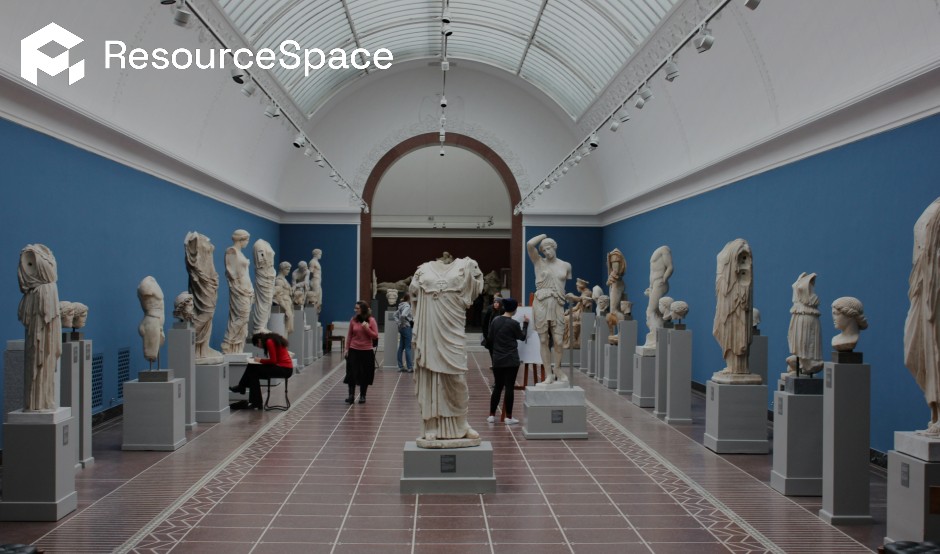
Museum archivists operate in a very different context to curators or DAM Managers.
While curators focus on interpretation and exhibition, and DAM Managers often prioritise accessibility and workflow efficiency, archivists are responsible for something more fundamental: the long-term integrity, accuracy and preservation of records. Their importance to arts and heritage institutions can’t be understated, ensuring that historical materials and objects of cultural significance remain accessible and properly documented for future generations.
This means their challenges are less about speed of campaign delivery, and more about consistency, standards and risk mitigation.
Every decision about storage, classification or format has long-term consequences for how collections can be accessed and understood, but when Digital Asset Management processes are not fit for purpose, the risks are not just operational—they’re historical.
READ MORE: Five common DAM challenges faced by... senior museum curators
In this blog we’re going to take a closer look at the four most common DAM challenges faced by museum archivists.
For museum archivists, the risk of data loss is probably the number one concern, but this becomes much more likely when outdated or fragmented storage systems are in place.
When correct DAM processes haven’t been implemented across an organisation, collections are often stored on local hard drives, ageing servers and legacy systems that were never designed for long-term preservation. These environments are vulnerable to hardware failure, accidental deletion and have limited backup capabilities, which puts long-term preservation at serious risk.
Archivists are typically aware of these risks, but budget constraints or reliance on institutional IT infrastructure can make change difficult, and as digital asset collections grow, so does the potential impact of hardware failure.
A Digital Asset Management system helps mitigate the risks when digitising physical artefacts, with features like automated backups, version control and secure infrastructure, a DAM provides a secure, centralised location for preserving digital collections without requiring a complete overhaul of existing systems.
Consistency is critical in archival work, but it’s one of the hardest things for archivists to maintain.
Different museum stakeholders might describe the same type of material in different ways, using varied terminology or leaving important metadata fields incomplete, and this leads to fragmented and unreliable records.
For archivists, inconsistent metadata makes classifi0cation, retrieval and research much more difficult. For example, it becomes harder to connect related materials, track provenance or ensure that collections are accessible to researchers and the public.
This is where a dedicated Digital Asset Management system is so important, because it supports standardisation by enforcing structured metadata schemas. By controlling how metadata is entered and maintained, and creating approval workflows for new uploads, a DAM helps archivists create consistent, reliable records that improve internal organisation and external access.
Archivists must plan for the long term, but digital formats and technologies can evolve rapidly.
File types that are currently widely used might become unsupported in the future, and software integrations can break as systems are updated or retired. This creates a risk that digitised artefacts and materials become inaccessible over time, meaning museums have to rely on the actual object for research purposes.
Maintaining file integrity and authenticity is equally important, and archivists need to be confident that assets have not been altered or degraded, and that there is a clear record of any changes.
A DAM addresses this challenge by supporting a wide range of file formats and making it easier to manage format migration—even as technologies evolve. Combined with audit trails, version control and file integrity checking, this ensures that digital assets remain accessible, traceable and reliable.
READ MORE: The difference between digital curation and digital preservation
Museums often have to operate within tight financial constraints, and this can limit the organisation’s ability to invest in modern tools and infrastructure.
This impacts archivists in particular, because large-scale digital transformation projects might not be feasible, particularly for smaller institutions or those that are reliant on public funding. This makes value for money a critical consideration, and archivists need solutions that deliver immediate benefits while supporting long-term preservation goals, without introducing unnecessary complexity or cost.
If you choose the right Digital Asset Management system, it will solve this problem by providing scalable systems that grow with the organisation. With this in mind, during the DAM selection process, rather than choosing a solution that requires a significant upfront investment, look for a vendor that allows institutions to start with core capabilities and expand over time. For museums, choosing a system with a proven track record in the arts and heritage sector is also important.
ResourceSpace is trusted by arts and heritage institutions all over the world, and we’re relied upon by museum DAM Managers and archivists alike to ensure long-term preservation of their objects and artefacts.
To find out more about how we can help you to mitigate against data loss, ensure consistent classification and long-term preservation, all within a price point your institution can afford, book a call with a DAM solutions expert below. We’ll discuss your needs and, if appropriate, arrange a free 30-minute demonstration of the platform.
A short consultation to understand your current setup,
challenges and objectives.
#IndustryNews
#BestPractice
#ResourceSpaceTips
#ImageBanks
#LegalCompliance
#ProductUpdates
#CulturalHeritage
#ArchivalStandards
ResourceSpace has changed the way the DEC uses content, making it much easier for us to quickly make assets available both internally and externally during our emergency appeals.

The ResourceSpace team has been exceptionally good at support services. They make everything so convenient and efficient with the cutting edge technology. Kudos to the team.