
ResourceSpace has changed the way the DEC uses content, making it much easier for us to quickly make assets available both internally and externally during our emergency appeals.

Our friendly team can guide you through how our extensive feature list can be tailored to your exact needs
Request a meetingWe’ll configure the perfect digital asset management system, carefully tailored to your sector
Request a meetingWe provide powerful DAM systems and bespoke consultancy and support to organisations of all types across the world.
Request a meetingBlog
1st September 2026
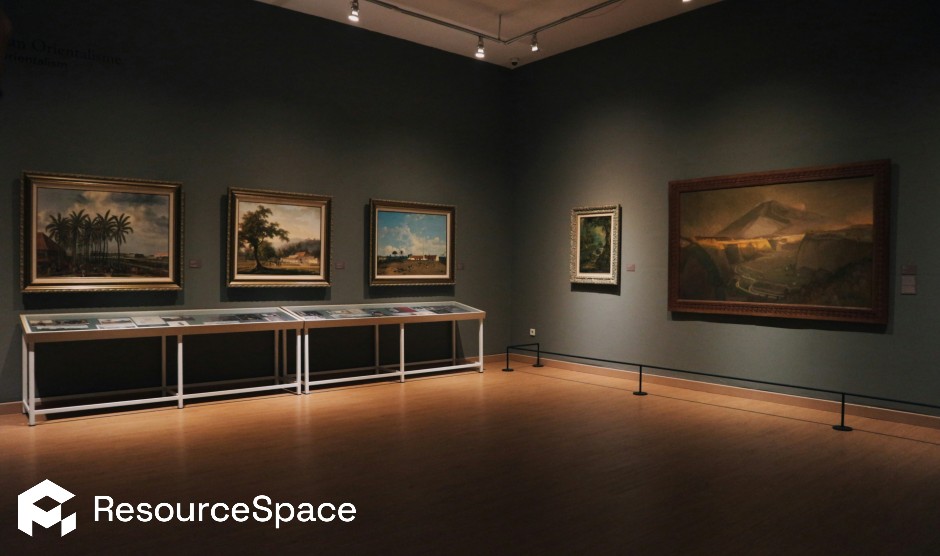
For arts and heritage institutions, image reproduction requests are still managed by a combination of emails, spreadsheets and institutional memory. A researcher might ask for a high-resolution image of an artefact, a publisher might request permission to reproduce a photograph in a book, or an exhibition partner might need access to a particular collection.
However, before anyone can approve the request, someone has to work out what the institution actually holds, who owns the rights and whether the asset is cleared for the proposed use.
This problem has two elements: confusing internal management and processes, and external requests.
First, there are the digital assets the museum holds: collection photography, archival images, exhibition materials and other content that may have different licences or restrictions attached to them. Then there are the reproduction requests coming in from outside, each with its own purpose, audience and proposed usage.
When this documentation isn’t managed centrally, answering even simple requests becomes surprisingly time-consuming. Curators and archivists will have to search several systems or ask colleagues to confirm what they know, creating delays for researchers and external partners while increasing the risk of approving a use that is not actually permitted.
A Digital Asset Management system can bring the asset, its rights information and the reproduction workflow together, giving teams a much clearer view of what can be shared, with whom and under what conditions.
A more reliable approach is to connect rights information directly to the digital asset it’s related to.
Instead of searching for an image in one system and then checking a spreadsheet or folder for its licence terms, a DAM can bring these records together. Key information can be recorded as metadata alongside the asset, while supporting documentation can also be linked or stored with it.
Curators and collections teams can see not just what an image is, but whether and how it can be used, reducing the need to rely on someone’s memory or manual cross-checking.
Using rights-specific metadata or licensing management tools provide museums and galleries with a quick way to understand whether an asset can be reproduced and under what conditions.
Depending on the collection, these might include:
It can also be useful to record a reproduction request reference, associated documentation and any specific conditions agreed with the rights holder. Keeping this information connected to the asset means staff can assess requests using consistent, accessible information.
Rights and reproduction permissions are very rarely permanent, with licenses potentially applying for a specific period of time, a specific use case, or a combination of both.
Recording an individual expiry date against the asset, or license stored against it, gives museum teams a clear way to manage these time-limited rights, with notifications providing alerts to the relevant team when an expiry date is approaching, giving them time to review the asset, renew the permission or identify an alternative. Once the date has passed, automated archiving can remove the asset from general availability while retaining it for the appropriate historical record.
This provides an important safety net to arts and heritage institutions, because rather than relying on someone to remember which assets they still have permission to use, the DAM helps prevent content with outdated usage rights from being accidentally selected for a new reproduction request.
A Digital Asset Management system also supports rights management by combining approval workflows with granular user permissions, giving museums greater control over who can view, download and distribute collection content.
For example, a reproduction request could trigger an approval workflow where a DAM Manager or administrator reviews the proposed use before allowing the user to download the asset. This provides an additional checkpoint where rights and restrictions can be verified before the file leaves the system.
Access groups also add a layer of control, because rather than giving every user access to every collection, permissions can be tailored accordingly. For example, a user might be able to view a collection, but only authorised staff can download the original files. Meanwhile, external partners could be given access to a specific set of approved assets without being able to browse the wider archive.
A clear audit trail gives museums a documented history of how reproduction decisions were made, and a DAM will record key actions such as:
This is important because reproduction is a recognised part of museum practice, with requests often involving publishers, researchers, exhibition partners or other institutions. If you’re asked later about why an asset was made available, you’ll have a clear record to refer back to.
For directors and legal teams, this provides useful evidence that rights and reproduction procedures are being managed consistently. It can also make internal reviews easier by providing a central record of decisions, helping to demonstrate responsible stewardship of the collection and reduce institutional risk.
Ready to find out more about how ResourceSpace can help museums, galleries and other arts and heritage institutions to take the hassle out of rights and reproduction management.
Book a discovery call with one of our DAM experts below, and discover how the likes of Historic England, the History of Science Museum and Yorkshire Sculpture Park are benefiting from advanced, AI-powered DAM functionality.
A short consultation to understand your current setup,
challenges and objectives.
#RightsManagement
#MuseumTech
#CulturalHeritage
#BestPractice
#IndustryNews
#ResourceSpaceTips
#Metadata
#Licensing
#WorkflowAutomation
#LegalCompliance
ResourceSpace has changed the way the DEC uses content, making it much easier for us to quickly make assets available both internally and externally during our emergency appeals.

The ResourceSpace team has been exceptionally good at support services. They make everything so convenient and efficient with the cutting edge technology. Kudos to the team.