
ResourceSpace has changed the way the DEC uses content, making it much easier for us to quickly make assets available both internally and externally during our emergency appeals.

Our friendly team can guide you through how our extensive feature list can be tailored to your exact needs
Request a meetingWe’ll configure the perfect digital asset management system, carefully tailored to your sector
Request a meetingWe provide powerful DAM systems and bespoke consultancy and support to organisations of all types across the world.
Request a meetingBlog
6th July 2026
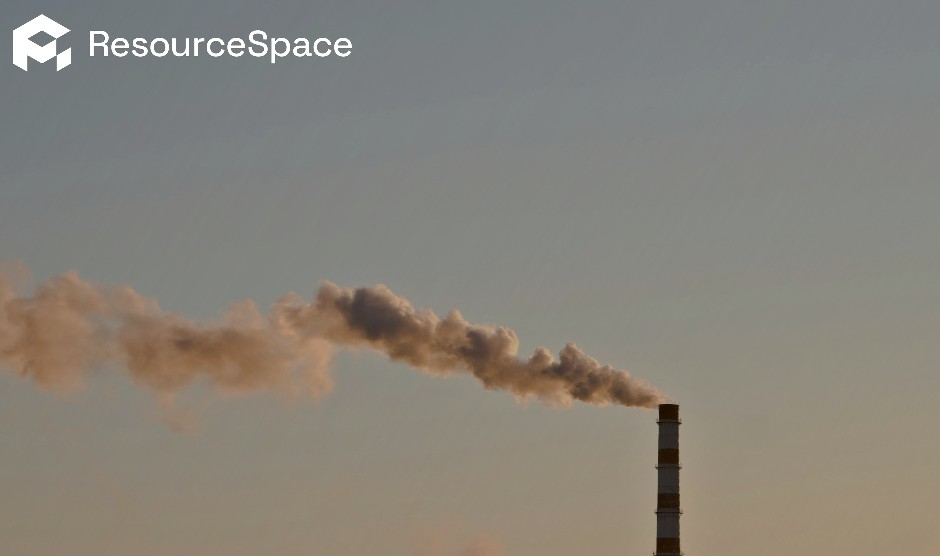
Organisations trying to improve sustainability and cut their carbon footprint, even if that’s to improve profitability rather than protect the environment, is nothing new. However, the rapid increase in AI usage across every sector in the economy has brought the impact of data centres and digital storage to the fore.
By reducing digital clutter you’ll be surprised by how much of an impact you can have on your digital carbon footprint, and a Digital Asset Management (DAM) system is integral to this effort.
The cost of digital clutter is often viewed through the lens of productivity. For example, teams waste time searching for files, duplicate content is created unnecessarily, and outdated assets remain in circulation. However, the environmental impact of storing, processing and maintaining ever-growing volumes of digital content receives a lot less attention.
Ultimately, every digital asset lives on physical infrastructure, with images, videos, documents and creative files stored in data centres that consume significant amounts of energy. While the impact of any individual file is negligible, the cumulative effect of billions of unnecessary, duplicated or obsolete files is far from it.
This challenge is becoming more significant as data centre demand accelerates worldwide. According to the International Energy Agency (IEA), electricity demand from data centres grew by 17% in 2025 alone, while global electricity demand increased by around 3% over the same period. The IEA expects total electricity consumption from data centres to double by 2030, with AI-focused facilities expected to triple their power consumption over the same timeframe.
Of course, the driving force behind this growth is not simply the number of files being stored, but the increasing demand for digital services, cloud computing and AI-powered technologies. Nevertheless, organisations are contributing to this with the volume of digital content they create, store and retain. Every duplicated image library, forgotten archive and obsolete asset adds to the infrastructure required to support modern digital operations.
On the positive side, the tech sector is investing heavily in renewable energy, energy efficiency and new power generation technologies, while the energy efficiency of individual computing tasks continues to improve rapidly. For organisations focused on sustainability, Digital Asset Management offers an opportunity to get better control over what content is retained, what can be archived and what no longer serves a purpose.
For most organisations, digital clutter usually builds gradually over time, driven by a combination of human behaviour, organisational complexity and a lack of clear governance.
One of the most common causes is simple fear of deleting files, particularly when nobody is entirely sure whether an asset might be needed in the future. This can lead to a ‘just in case’ mindset, with teams keeping multiple versions of the same file because removing the wrong one could cause problems later.
This is exacerbated when there’s no clear ownership of specific digital assets or collections, either through a lack of process or staff churn, or when assets are spread across multiple disconnected systems. Without a single source of truth, duplicate files multiply and nobody has a complete picture of what exists across the organisation.
Taken together, these issues lead to digital asset libraries growing continuously, regardless of whether the content is still useful or not. Without clear ownership and governance, digital clutter becomes the default, with every new campaign, project or event adding more content, while very little is ever removed. Without a DAM system, the result is a dispersed collection of assets that grows larger each year, while becoming increasingly difficult to manage, maintain and extract value from.
An effective deletion strategy involves creating a structured process that distinguishes between assets that still provide value and those that no longer serve a purpose.
Different asset types have different lifecycles, so the first step is to establish clear asset retention periods. For example, campaign materials, event photography and social media content may only need to be retained for a defined number of years, while brand assets, historical records or compliance-related content may require much longer retention.
You have to treat content restricted by usage rights on a case-by-case basis rather than a general policy based on asset type. Metadata plays a key role here, and it’s possible to archive assets automatically when a certain date is hit if the DAM system allows.
Metadata can also capture information such as creation date, last use date, campaign association and asset status, allowing organisations to quickly identify content that is outdated, duplicated or no longer relevant. Rather than manually reviewing thousands of files, DAM managers can use metadata filters to surface assets that are suitable for archiving or removal.
However, regular manual DAM reviews are important too, and organisations should schedule periodic reviews of assets to prevent the build up of digital clutter.
In practice, most assets do not move directly from active use to deletion, and a structured workflow typically progresses from active storage to archive, followed by review and then deletion if the asset no longer has operational, historical or legal value. This approach reduces risk while keeping digital collections focused, manageable and sustainable.
Creating new content can involve travel, photography or video crews, equipment, editing time and multiple rounds of review, and even relatively small projects consume resources.
With this in mind, one of the most effective ways to improve the sustainability of Digital Asset Management is through better reuse. Every time an organisation can repurpose an existing image, video or design asset instead of creating a new one, it avoids both financial costs and the environmental impact associated with content production.
A well structured DAM delivers a lot of value in this respect, with metadata making it easy to find existing assets thanks to advanced search functionality.
The result is a more efficient content operation, with organisations maximising the value of assets they have already invested in, reducing demand for unnecessary production activity and making better use of the creative resources available to them.
At ResourceSpace, we take our commitment to sustainability seriously. As a certified B Corp, the environmental impact of our business operations is evaluated each year, while we’re also an Ecologi partner, supporting the prevention of over 500 tCO2e from being emitted through 49 verified carbon avoidance projects. Our optional AI functionality uses 100% green electricity and is climate positive too.
To find out more about how ResourceSpace supports sustainable asset management and makes it easier for organisations to manage digital asset libraries book your free DAM consultancy below, including a 30-minute demo with a solutions specialist.
A short consultation to understand your current setup,
challenges and objectives.
#Sustainability
#CarbonFootprint
#DigitalClutter
#EnergyEfficiency
#BestPractice
#IndustryNews
#ResourceSpaceTips
#ProductUpdates
#DigitalContent
#FileManagement
#RenewableEnergy
ResourceSpace has changed the way the DEC uses content, making it much easier for us to quickly make assets available both internally and externally during our emergency appeals.

The ResourceSpace team has been exceptionally good at support services. They make everything so convenient and efficient with the cutting edge technology. Kudos to the team.