
We can upload, share and store our best
visual files across all our global channels
for staff across the CARE world to instantly
access – significantly improving our ability
to respond in a coordinated manner, and
at speed.

Our friendly team can guide you through how our extensive feature list can be tailored to your exact needs
Request a meetingWe’ll configure the perfect digital asset management system, carefully tailored to your sector
Request a meetingWe provide powerful DAM systems and bespoke consultancy and support to organisations of all types across the world.
Request a meetingBlog
4th August 2026
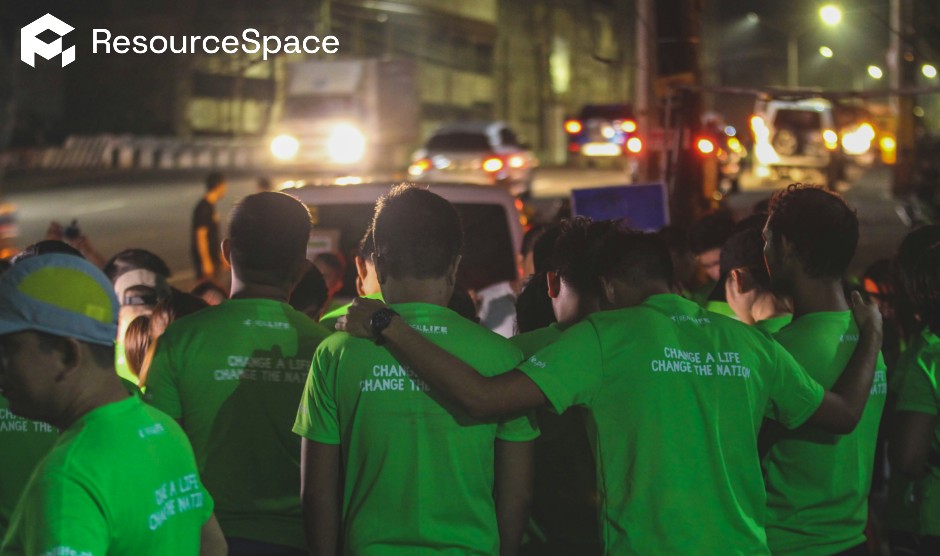
For many charities, the biggest obstacle to effective storytelling is not collecting powerful content, but getting it to the people who need it in time.
Stories Managers and fundraising teams often need compelling visual assets at short notice to support an appeal, grant application or emergency campaign, but this is a major challenge without a dedicated Digital Asset Management (DAM) system, or a poorly organised one.
This challenge is compounded for global charities, because field teams might be operating in different time zones, dealing with language barriers or working with limited internet connectivity. This makes it difficult to answer last-minute requests, or to confirm whether a specific asset is suitable for use. By the time the correct file has been located, valuable campaign time may already have been lost.
There are various high profile studies that quantify that problem. Analysis conducted by McKinsey Global Institute found that employees spend an average of 1.8 hours each day searching for and gathering information. This doesn’t relate to digital assets alone, but a separate survey conducted by SearchYourCloud found that nearly half (47%) of workers spend more than one hour per day searching for files.
Let’s take a closer look at how a DAM system can help to close the gap between field teams and fundraisers.
This is a common, critical challenge faced by international charities, but fortunately it can be solved by an effective DAM workflow that covers everything from image capture through to the asset being used in a fundraising campaign.
READ MORE: Simplifying charity story collection with smart uploads and consent
Rather than storing photos and videos on a camera or mobile device until someone returns to the field office, a DAM system facilitates uploading of content on-the-go, as long as there’s an internet connection. That could be from a project site, a regional office or while travelling between locations using a mobile device.
This means valuable assets reach the organisation much sooner, allowing Stories Managers and fundraising teams to begin reviewing and planning campaigns without waiting days or weeks for files to arrive. It also reduces the risk of assets being forgotten or lost on personal devices.
By uploading new content directly into a centralised DAM, charities create a single, secure starting point for every asset, regardless of where in the world it was created.
To be useful to fundraising and communications teams, a new digital asset needs the right metadata from the moment it enters the DAM system.
Rather than relying on someone at head office to tag assets days or weeks after they’ve been created, contributors can complete a simple metadata form during upload, capturing details such as the programme, campaign, country, project location and story context. This can be enhanced even further by AI tagging that picks up on visually descriptive elements automatically.
When a fundraising team needs images for an emergency appeal or campaign, they can search using these metadata fields and quickly retrieve approved assets instead of trawling through folders or contacting field teams for clarification.
The people capturing content in the field are usually in the best position to record consent and usage information accurately. They have the context of the project, know who appears in the images and often have immediate access to the relevant consent forms or supporting documentation. Rather than storing this information separately, it should be linked directly to the asset as part of the upload process.
Recording details such as consent status, approved uses, expiry dates and references to supporting documentation within the DAM at the point of upload makes it so much easier to find the information needed to assess whether an asset is suitable for publication. What’s more, it eliminates the uncertainty faced by fundraising, communications and marketing teams back at head office when trying to choose assets to use in an appeal.
Once assets have been uploaded, tagged and linked to the relevant consent information, they become immediately available to authorised users across the organisation.
Instead of waiting for files to be emailed or permissions to be confirmed, they can respond more quickly to fundraising opportunities with trusted, campaign-ready assets.
The secret to developing a metadata taxonomy that your field teams will actually use is to only require tagging with simple, mobile-friendly information. The more complex the taxonomy structure, the more likely it will be skipped or tagged incorrectly. Extra information can always be added by Stories Managers reviewing content once it’s been uploaded to the DAM but before it goes live.
With this in mind, the taxonomy should be worked on collaboratively by the Stories Manager, fundraising and communication teams, with input from the various field teams that will actually be using it. Prioritise the essential information, such as ‘location’, ‘programme area’ (for example, education, emergency response or healthcare), ‘emotional tone’ and ‘beneficiary name’ or, if anonymity is required, an anonymised identifier.
This shouldn’t be a set-and-forget activity, and you should regularly review this metadata taxonomy to ensure it’s working for both the field teams and HQ.
We can upload, share and store our best
visual files across all our global channels
for staff across the CARE world to instantly
access – significantly improving our ability
to respond in a coordinated manner, and
at speed.
ResourceSpace is relied upon by a number of leading global charities, including Oxfam, Unicef and British Red Cross.
Want to find out more about how we’ve supported international charities to help them manage the disconnect between global field teams and local fundraisers? We’ve been working with Tearfund since 2013, and you can find the case study here.
A short consultation to understand your current setup,
challenges and objectives.
#Fundraising
#Storytelling
#Charity
#ImageBanks
#ResourceSpaceTips
#BestPractice
#IndustryNews
#ProductUpdates
#Metadata
#ContentManagement
#AssetWorkflow
#Nonprofit
#VisualAssets
#Collaboration

The team at ResourceSpace have been a joy to work with, helping us manage what could've been a really difficult transition every step of the way.
I've found it extremely easy, comfortable, simple and fast. We are extremely happy with the tool and their support.