
ResourceSpace helps to structure what we have, what we obtain, and how we control access - which mainly comes from metadata. It has allowed us to move to create a standardised catalogue of searchable and findable assets.

Our friendly team can guide you through how our extensive feature list can be tailored to your exact needs
Request a meetingWe’ll configure the perfect digital asset management system, carefully tailored to your sector
Request a meetingWe provide powerful DAM systems and bespoke consultancy and support to organisations of all types across the world.
Request a meetingBlog
Published:
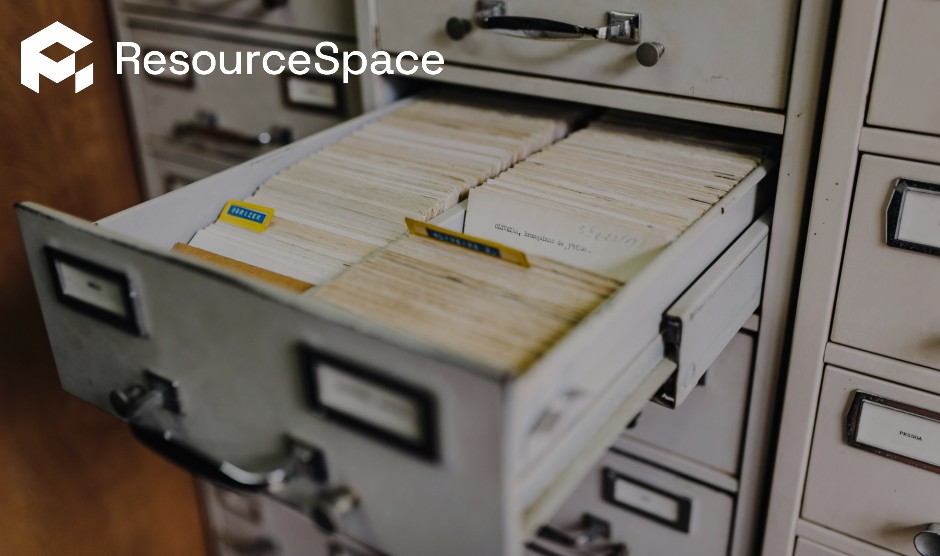
Legacy folder structures can work okay when an organisation has a very small archive and a limited number of people managing the files, but as that collection grows the problems start to compound.
Duplicate assets appear across multiple folders, important files become buried in nested directories, staff spend more time navigating folders than finding the content they need, and there simply is no reliable single source of truth for asset management.
For organisations managing large or growing archives, folder hierarchies are almost never a sustainable long-term solution — and this is why structured metadata is essential.
READ MORE: The Complete Guide to Metadata
Typically, metadata falls into one of four categories, each serving a different purpose:
Note that these categories are useful ways to organise metadata, but they are not entirely separate in practice. For example, a file format is technical information, but it can also influence rights management if certain software or formats have licensing restrictions. You don’t need to categorise every field into a single metadata type, but ensure that the info needed to discover and preserve each asset is recorded consistently.
The FAIR Principles provide a framework for making digital information easier to find, access, combine and reuse.
There are four principles of the FAIR framework:
Originally developed for research data management, they are increasingly relevant to museums, galleries, libraries and archives managing large digital collections. However, note that ‘accessible’ doesn’t mean open to everyone.
An archive can be ‘FAIR’ without necessarily making every digital object publicly available. For example, a photograph containing sensitive personal information might be discoverable through its metadata, while access to the original file is restricted to authorised researchers. What’s important is that users can understand what exists, whether they can access it and what conditions apply.
FAIR applies at three different levels for arts and heritage institutions:
Considering all three FAIR levels helps ensure that collections are not simply searchable within one platform, but can also be understood and referenced across different environments.
Remember that making an archive FAIR goes beyond improving asset discovery and connecting systems, through to demonstrating that digital records remain authentic and complete. This means maintaining provenance, recording changes and preservation actions, managing versions and keeping files in sustainable formats.
Models such as the Open Archival Information System (OAIS) provides a framework for managing digital information over the long term, and this complements the FAIR framework. For example, FAIR helps make collections discoverable and reusable, while the OAIS ensures that the records remain reliable decades after they’ve been created.
A metadata schema provides a blueprint for how information is recorded in your archive, defines which fields are available and the data stored in each one, and how that information should be entered.
The aim is to create a consistent structure that supports discovery and long-term preservation.
You don’t necessarily need to complete every metadata field when an asset is added to the DAM, and requiring too much information can make uploading arduous.
Start by identifying the essential information every asset must have in order to find it and manage it effectively, making them mandatory at the point of upload. Remember, if an asset can’t be safely managed, identified or retrieved without a piece of information, the field needs to be mandatory.
Below is a simple example that maps some common archive metadata fields to the 15 elements of the simple Dublin Core Metadata standard. It’s a good starting point for Archivists, Collection Managers and DAM Managers that can be adapted to suit your organisation’s collection.
| Field | Dublin Core element | Requirement |
| Asset ID | Identifier | Mandatory |
| Title / Name | Title | Mandatory |
| Description | Description | Mandatory |
| Subject | Subject | Mandatory |
| Creator | Creator | Mandatory |
| Date created | Date | Mandatory |
| Resource type | Type | Mandatory |
| File format | Format | Mandatory |
| Rights / permissions info | Rights | Mandatory |
| Collection | Relation | Optional |
| Publisher | Publisher | Optional |
| Language | Language | Optional |
| Source | Source | Optional |
Note that, although Dublin Core gives you a recognised structure for describing resources, it doesn’t have to dictate every detail of your DAM implementation. The most important thing is to document your schema and apply it consistently.
In the section above we’ve explored a schema template to support a DAM implementation, but it’s not something you can create once and then forget about. As your collection grows and your team changes over time, metadata requirements will evolve.
What’s more, without clear ownership of the DAM, different departments and users might start introducing their own fields and processes, undermining the archive’s consistency. With this in mind, you need to assign responsibility for the schema to a DAM Manager, Archivist or team. This role will include maintaining field definitions, approving changes and ensuring new requirements continue to follow the agreed standards.
Metadata audits are also essential in maintaining consistency, and they should be scheduled at least once a year. This will include a review of incomplete records, identification of inconsistent terminology and duplicate fields, as well as removing any fields that are no longer useful. This audit shouldn’t be left entirely to the DAM Manager though, and you need to make sure you’re consulting the people that actually use the DAM every day.
READ MORE: Why ResourceSpace is perfect for… arts and heritage
ResourceSpace helps to structure what we have, what we obtain, and how we control access - which mainly comes from metadata. It has allowed us to move to create a standardised catalogue of searchable and findable assets.
ResourceSpace is a leading Digital Asset Management vendor for the arts and heritage sector, and we’re trusted by some of the world’s leading institutions to manage their extensive archives.
To find out more about how we can support your organisation, book your free discovery call with one of our DAM experts below.
A short consultation to understand your current setup,
challenges and objectives.

ResourceSpace has changed the way the DEC uses content, making it much easier for us to quickly make assets available both internally and externally during our emergency appeals.

The ResourceSpace team has been exceptionally good at support services. They make everything so convenient and efficient with the cutting edge technology. Kudos to the team.